Photo Gallery and Blog 2025
Bald Eagles
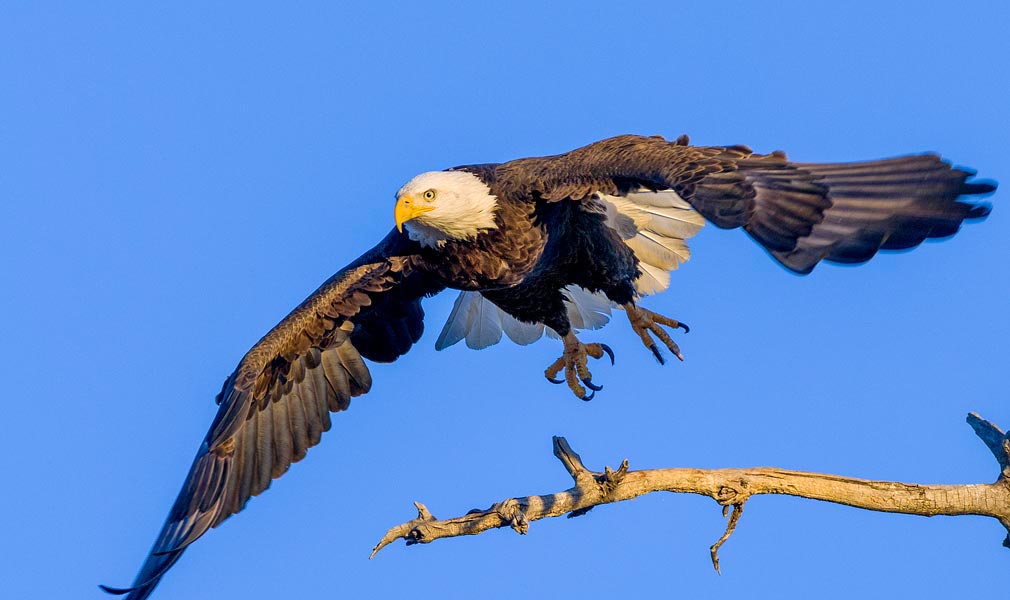
It's the dead of winter and the resident pair of bald eagles is here.
I go watch and wait for them to do something, and that can take a long time.
An eagle looks pretty big just sitting there but when it suddenly lifts off, you really get to see its huge wingspan.
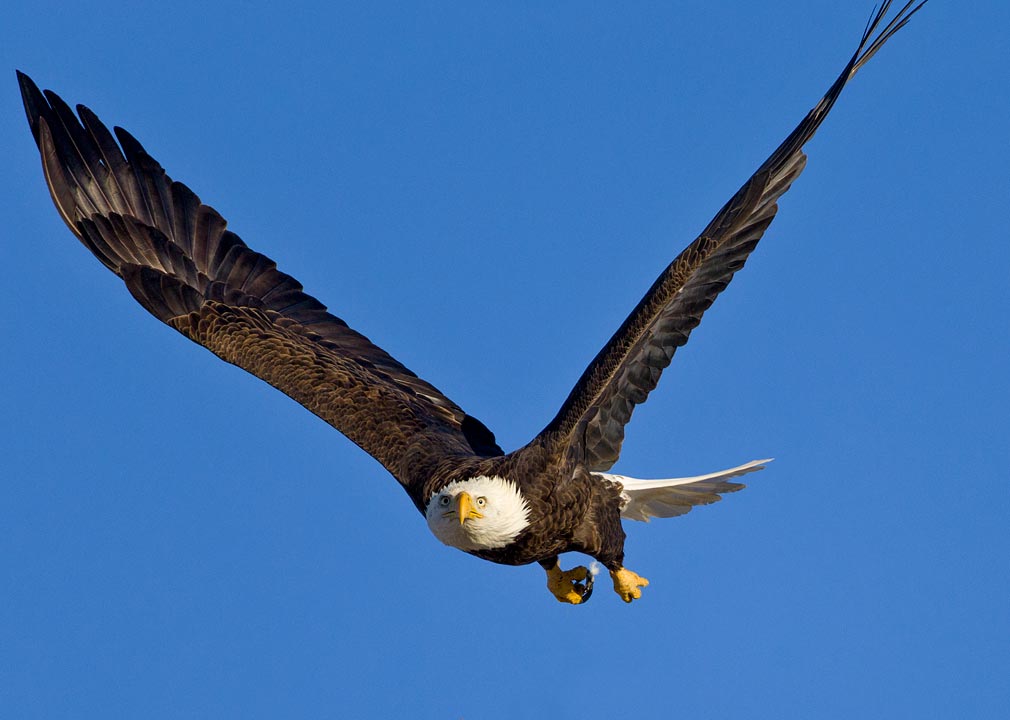
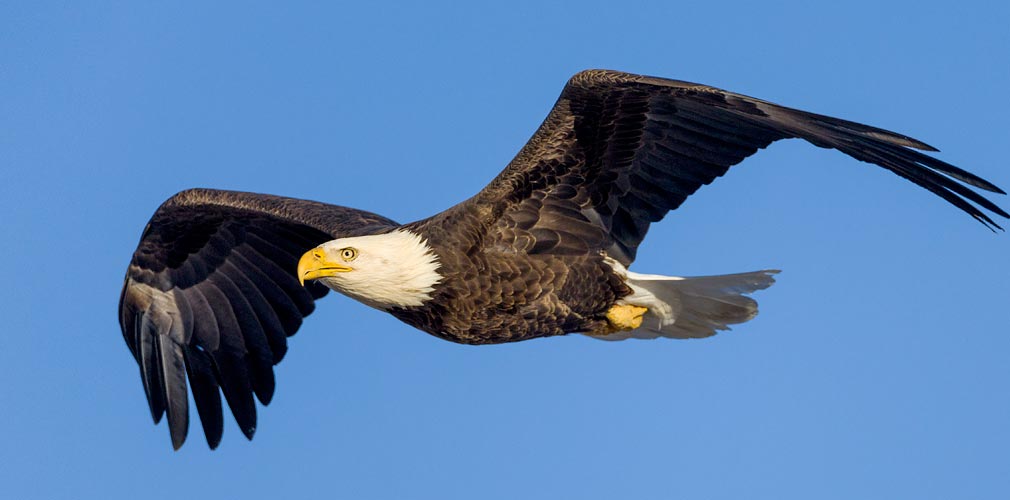
It is impressive when a huge majestic bird like this flies by.
With that stern expression, they always look like they are on a serious mission.
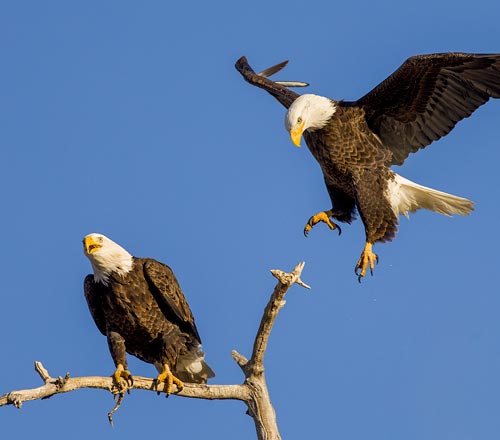
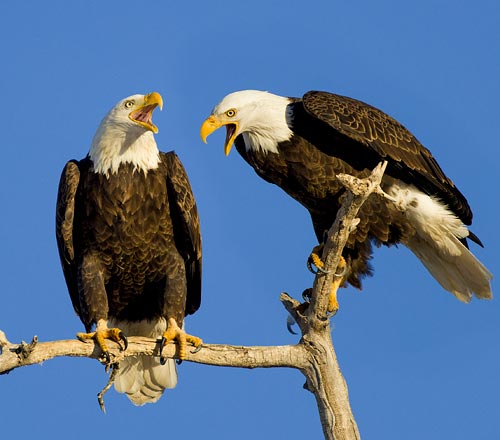
Somehow they always manage to land perfectly on that little stick.
Then they chirped at each other.
"I thought you were getting dinner!"
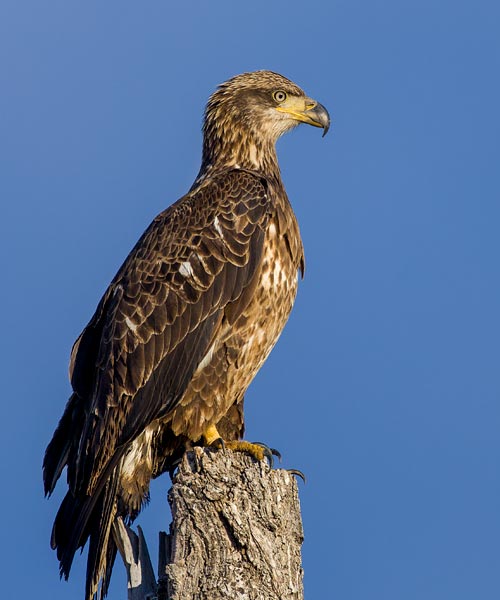
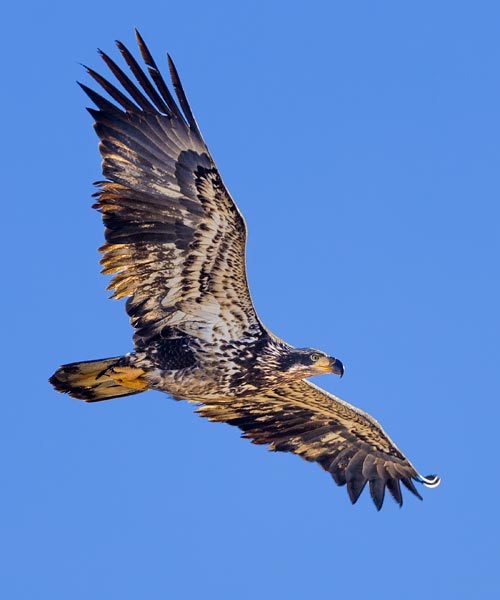
Early in January, several juvenile eagles were here too.
It's like the kids came home for the holidays.
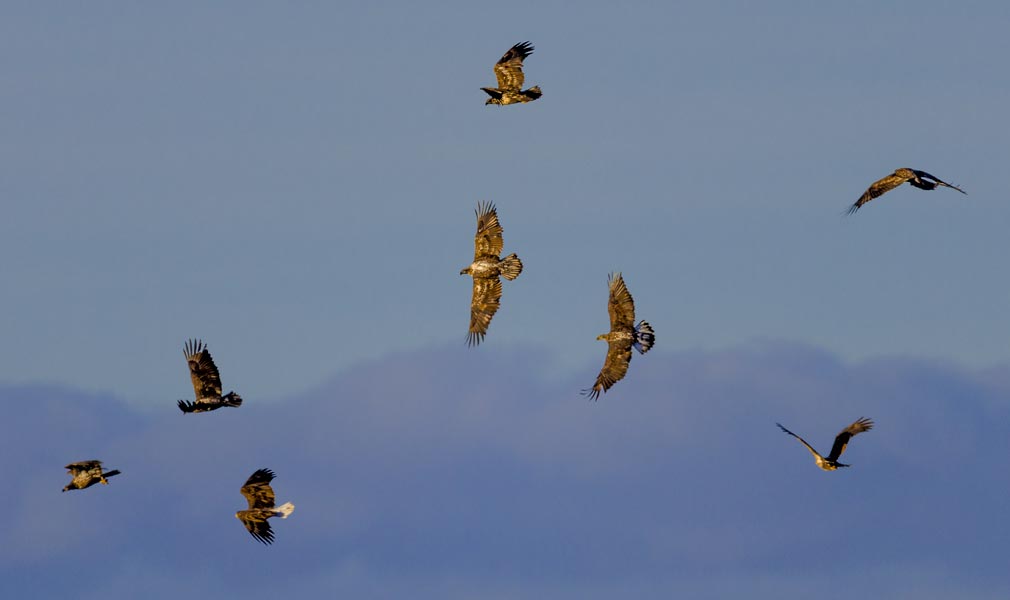
They flew around together. I guess this is what eagles do for fun.
Screech Owls
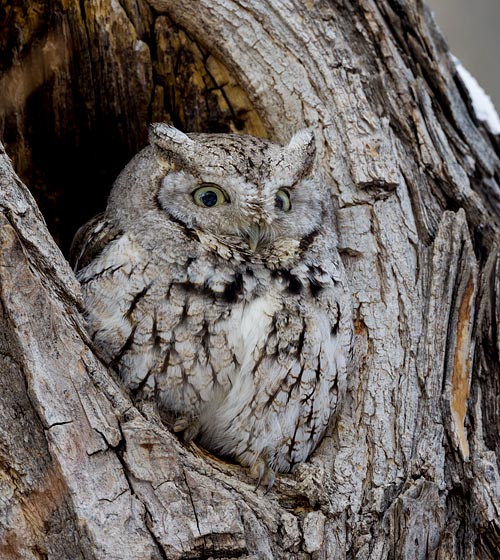
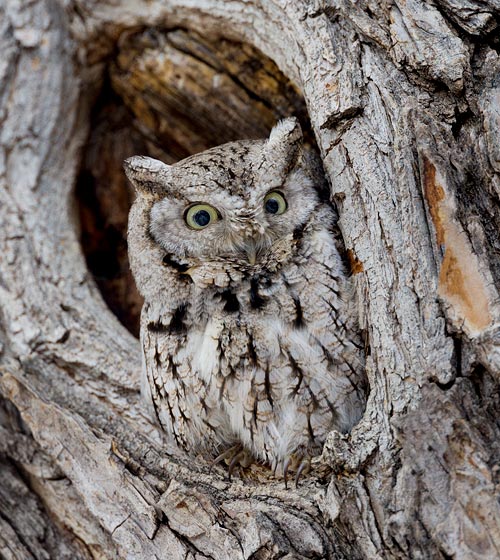
It's hard to find a screech owl because its excellent camouflage blends in with tree bark.
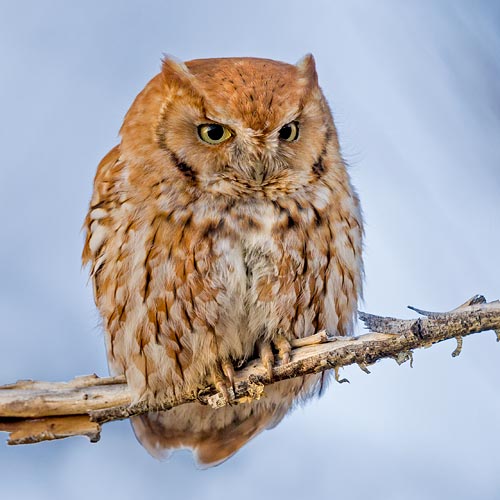
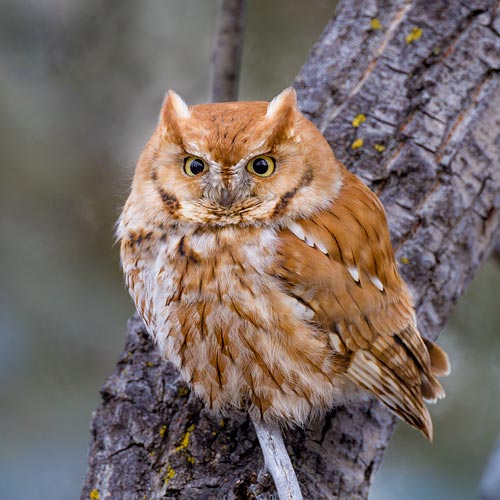
This is the red-morph variety of eastern screech owl.
Even with its reddish color, it's still hard to find.
White Pelican
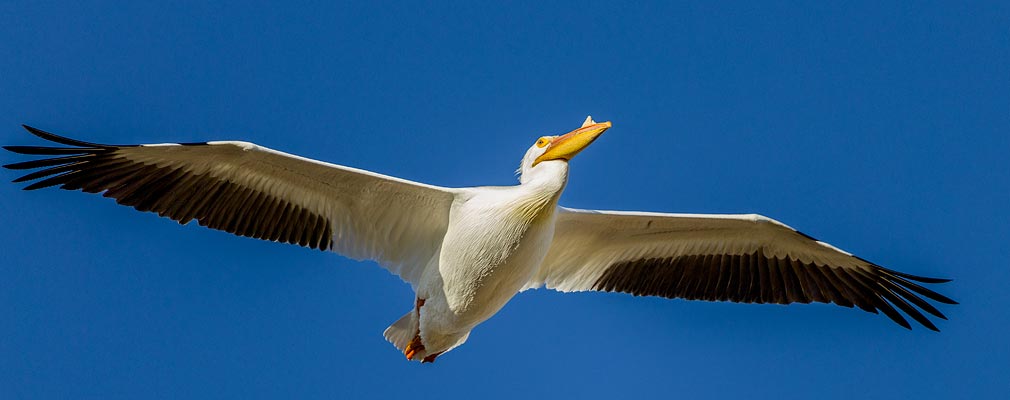
Pelicans are huge birds with a nine-foot wingspan.
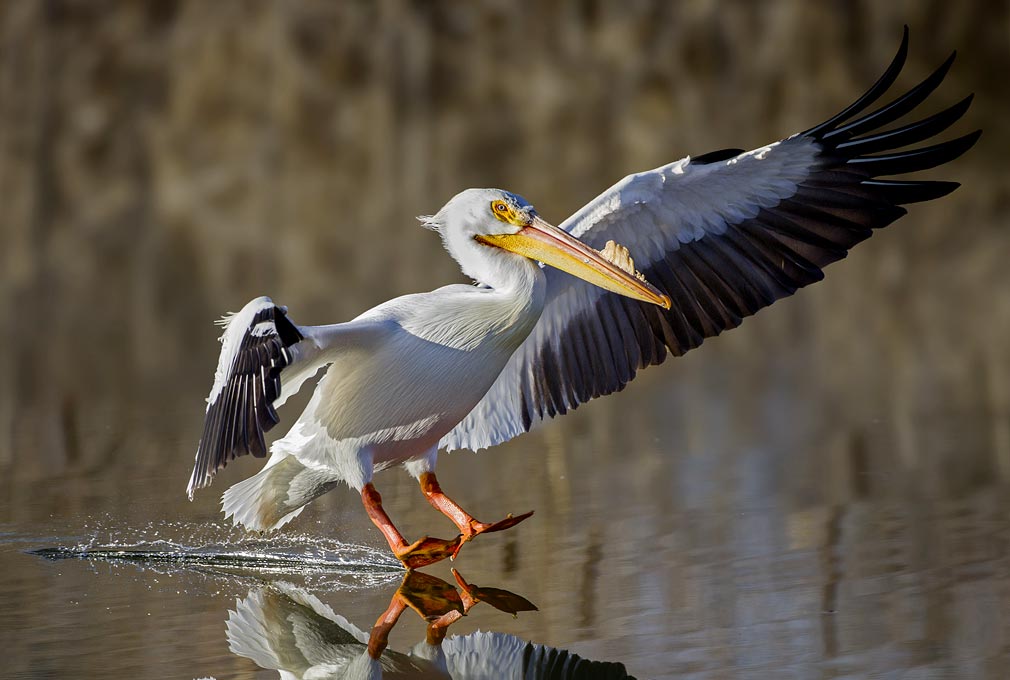
Landing on a pond is a lot like water skiing.
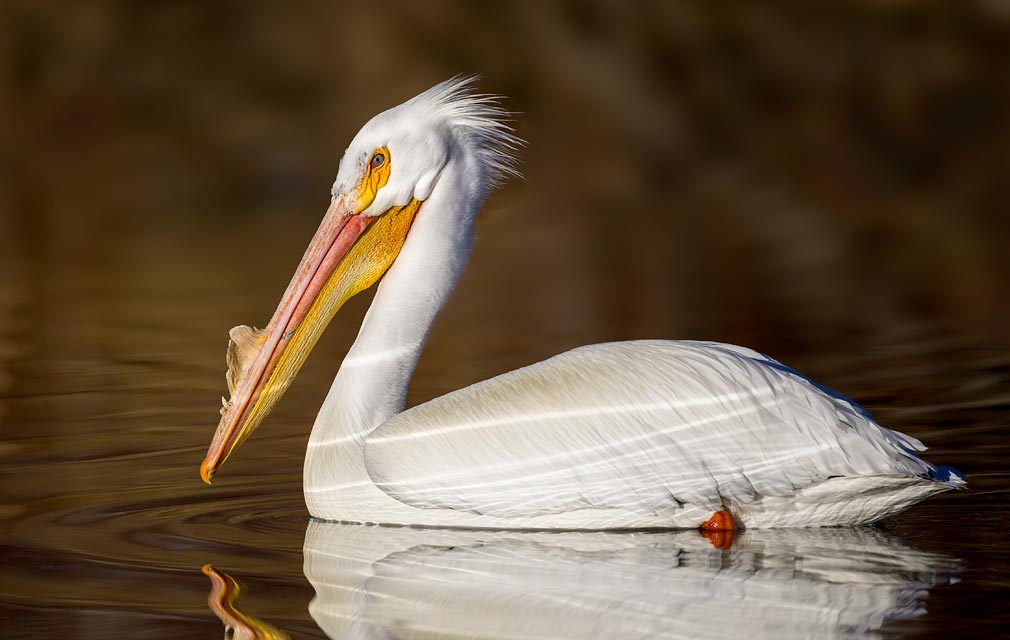
Pelicans grow a "horn" on the top of their beaks for mating season.
Great Horned Owls
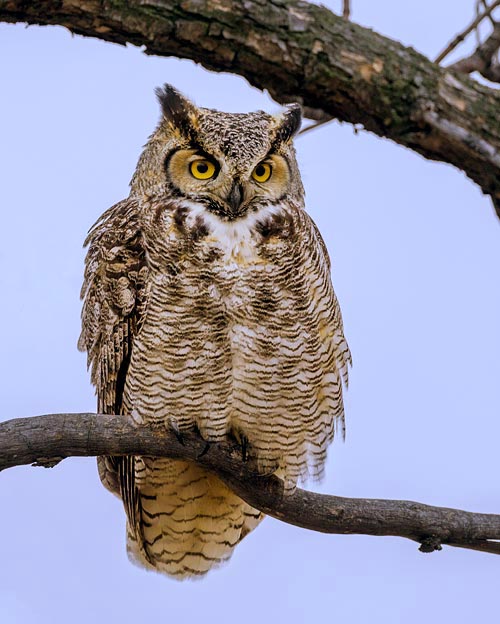
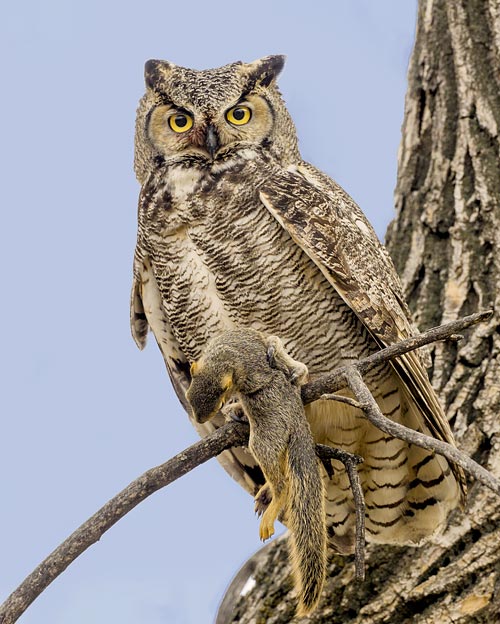
Owls hunt by sitting and staring at the ground from a high perch, watching and listening.
Hunting is the job of the male owl while the female tends to the chicks.
The owls seem to largely ignore squirrels scampering around on the trees.
However, this one was on the ground and the owl grabbed it.
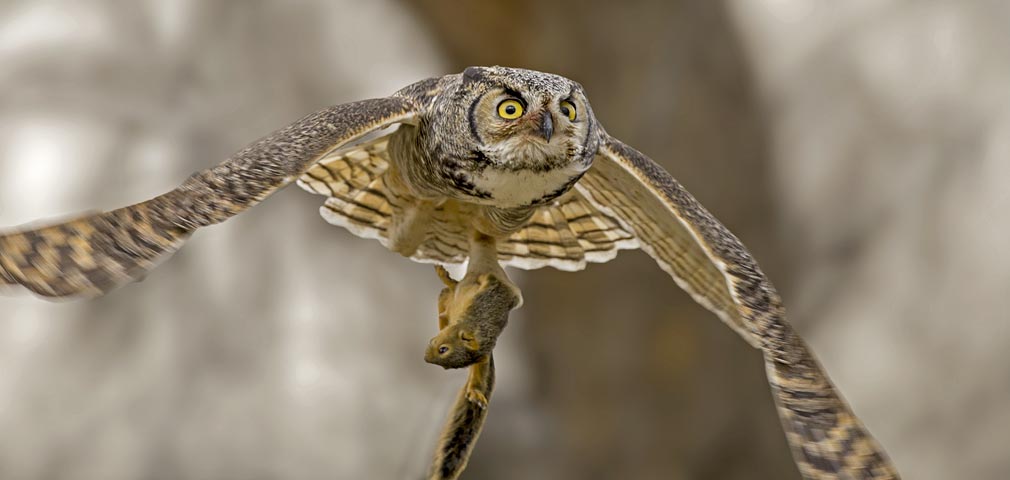
Here he comes back to the nest with the squirrel in tow.
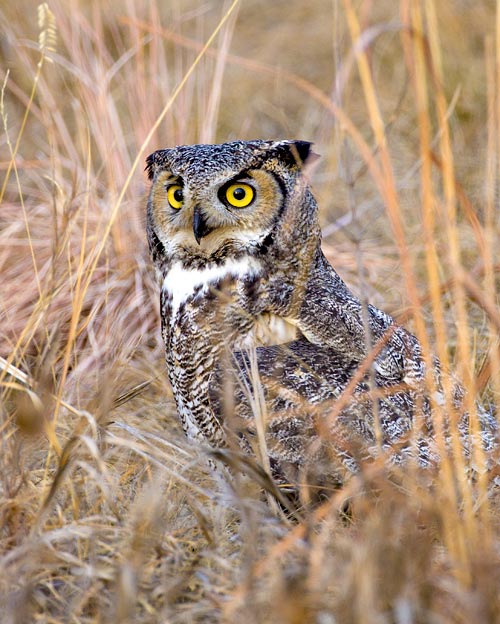
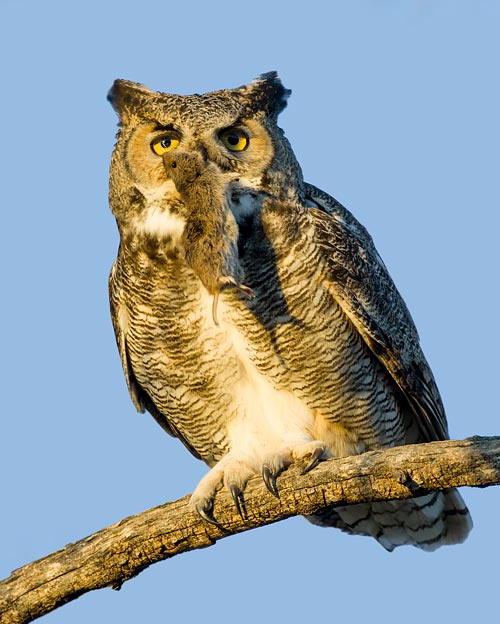
He located a vole hidden in deep grass, then glided down and nailed it.
He sat there on the ground for quite a while before flying up.
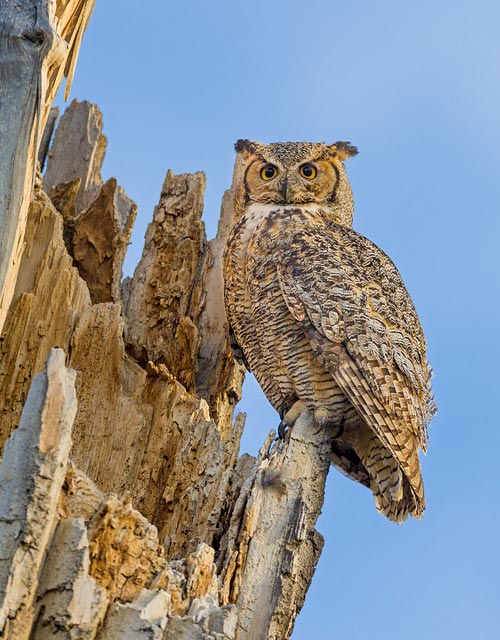
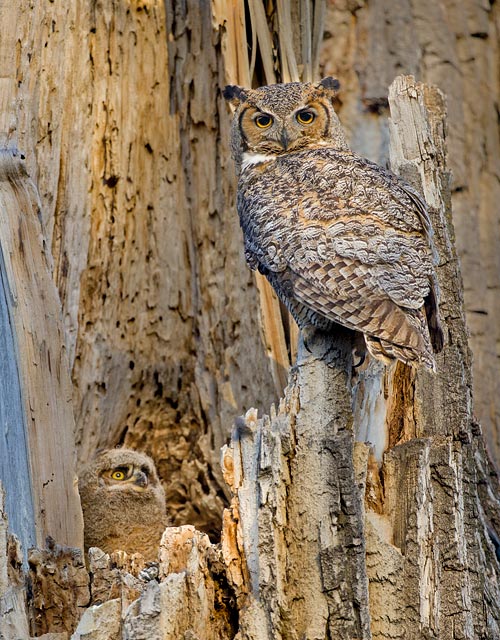
Mom owl tends to the chicks in the nest.
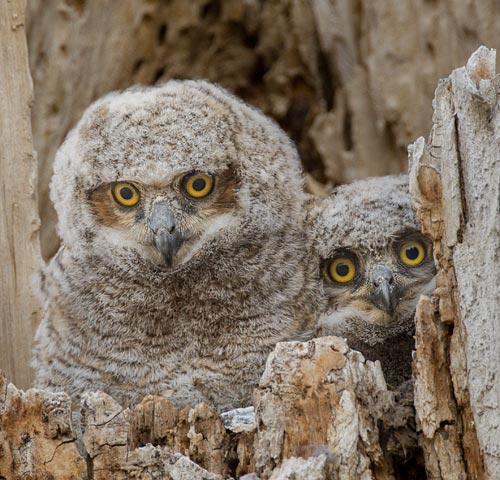
In early April, the owlets are fuzzy, peeking out from the nest.
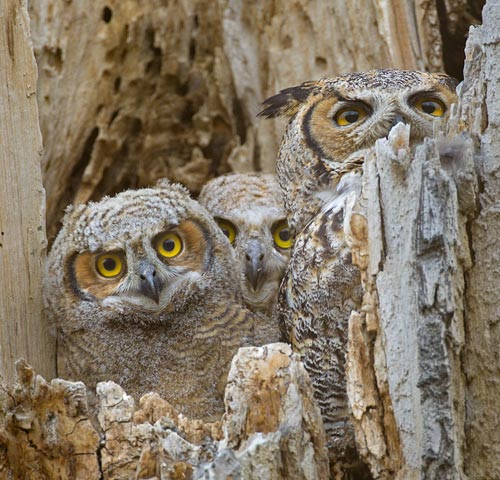
Three weeks later, their faces have developed. Mom was there too.
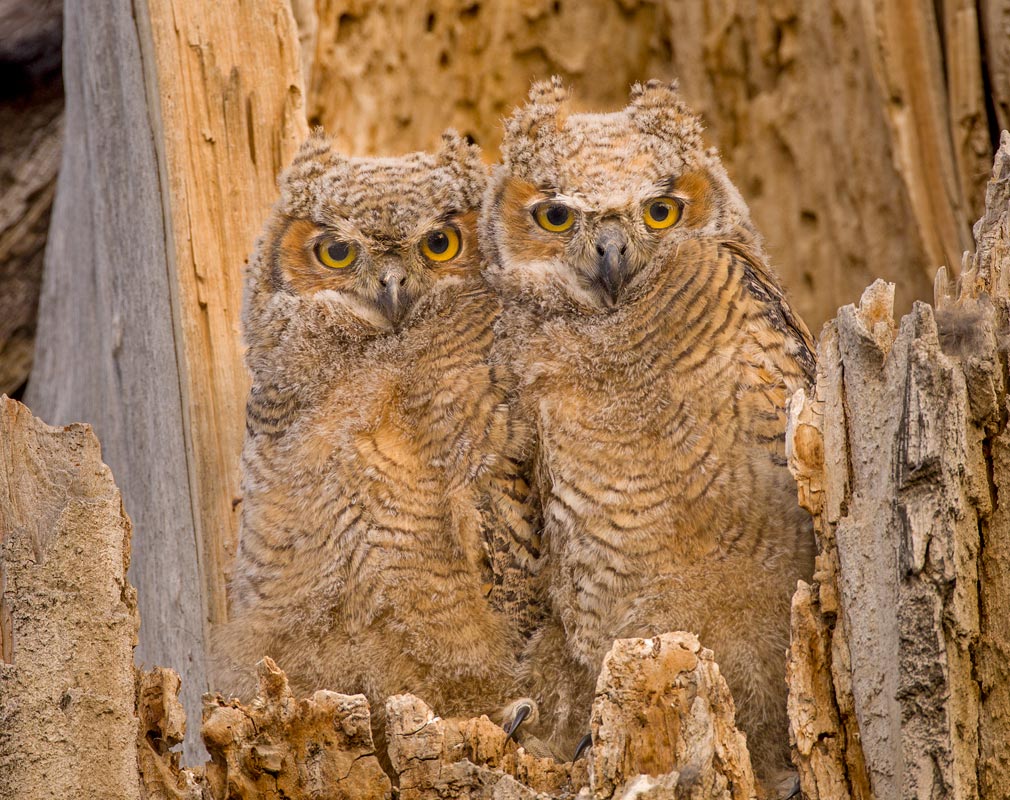
Both owlets are wide awake at sunrise.
They have grown a lot. One left the nest two days later.
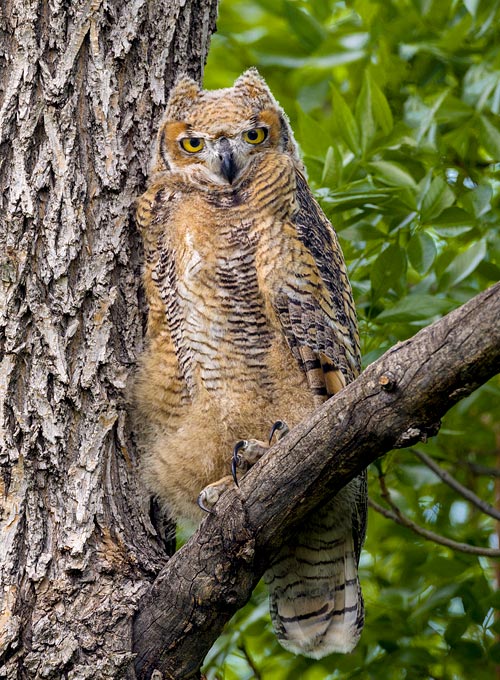
By late May, the owlet has grown and is developing darker striped chest plumage.
It can fly between trees with no problem.
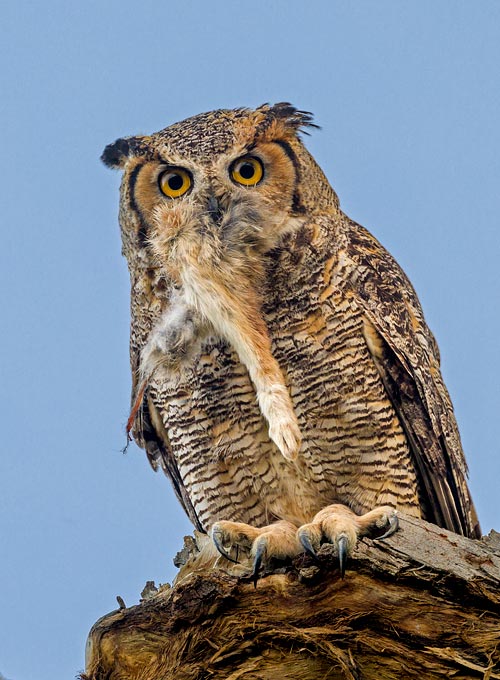
Mom owl has a leftover bunny leg for dinner.
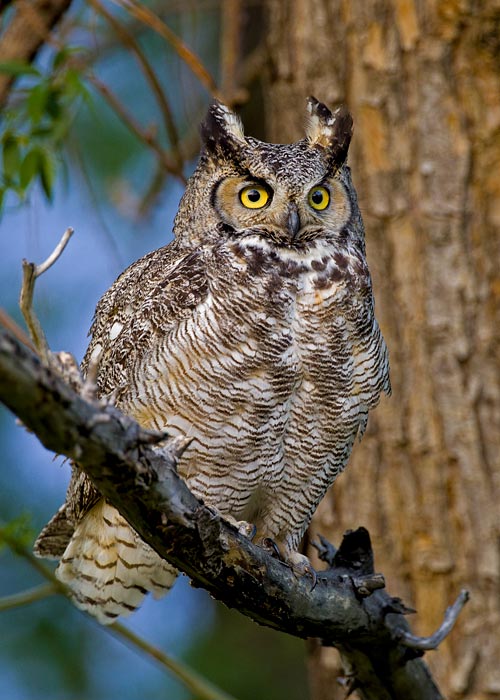
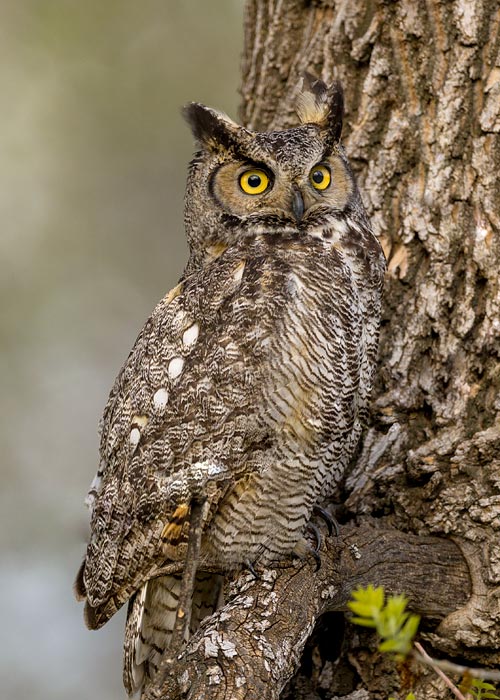
Dad owl shows up well after dusk to hunt for food.
Owls are difficult to find because they look so much like tree bark.
At a different nest...
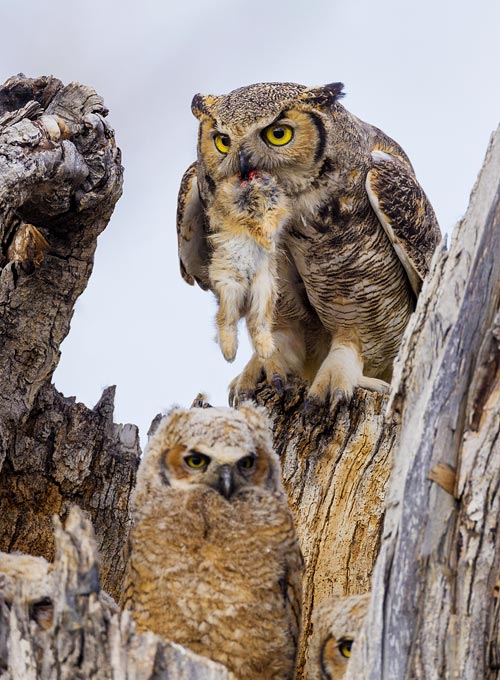
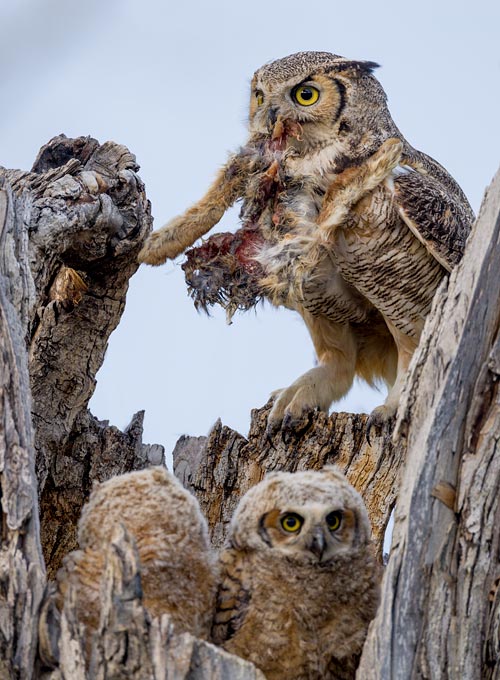
Mama owl is busy bringing plenty of food to her four hungry owlets.
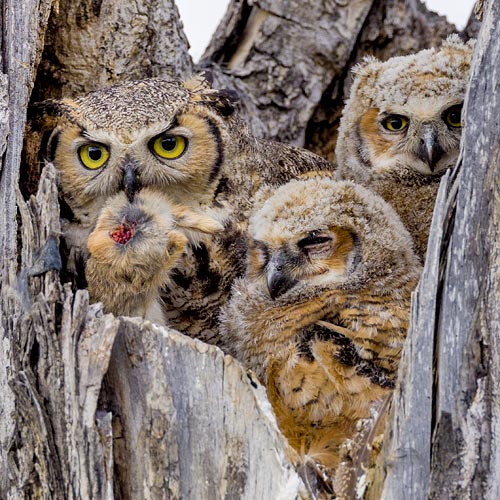
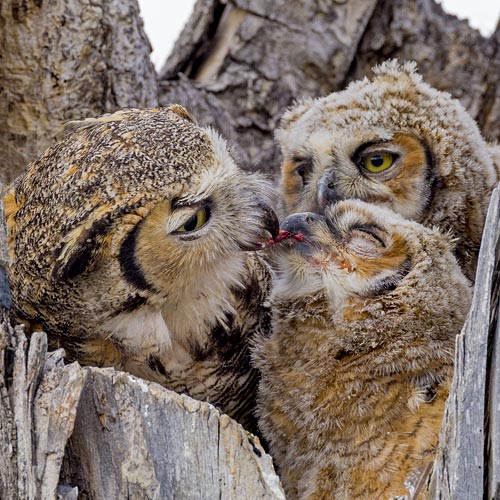
Then she jumped into the nest and fed one chick while the others patiently awaited their turns.
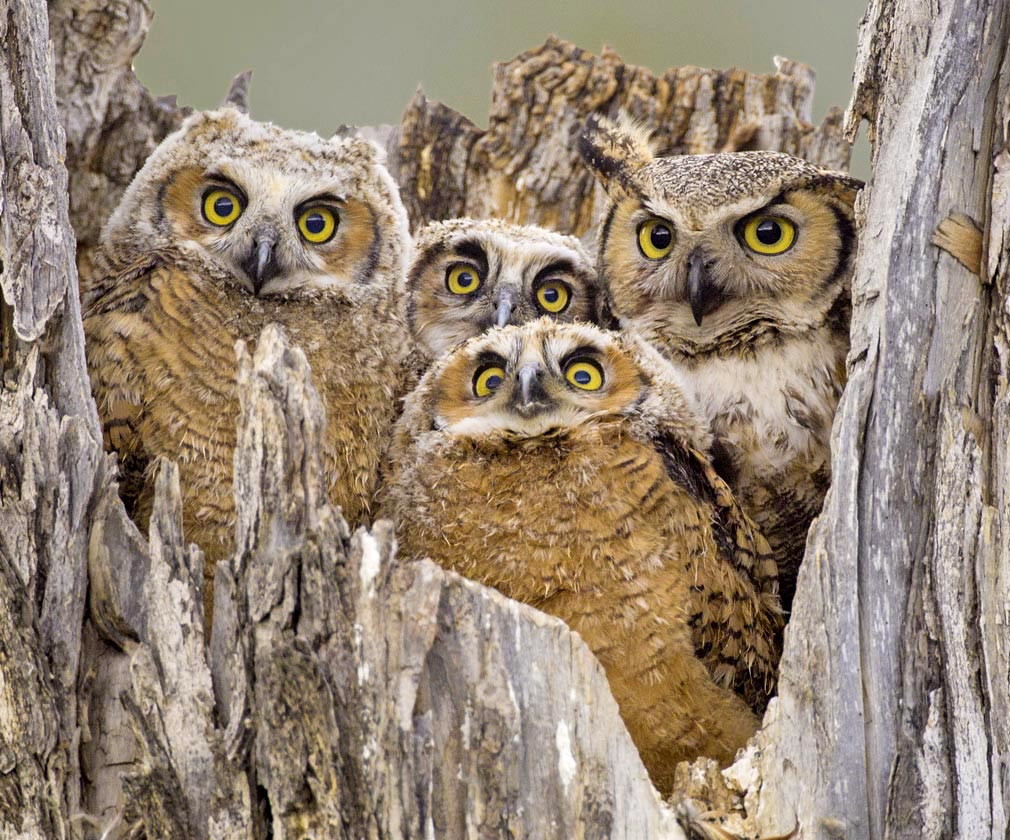
They briefly posed for a family portrait. Like any family portrait, there is always one distracted goofball.
Wild Turkey
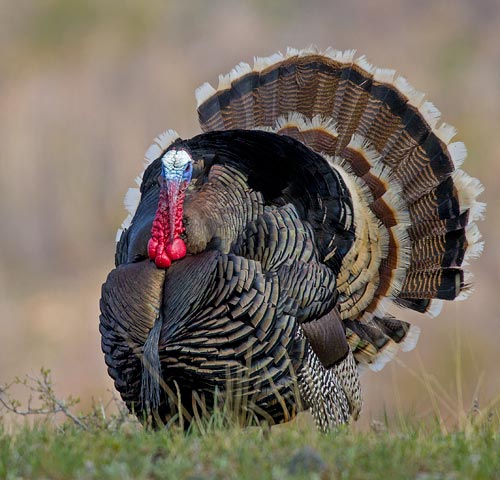
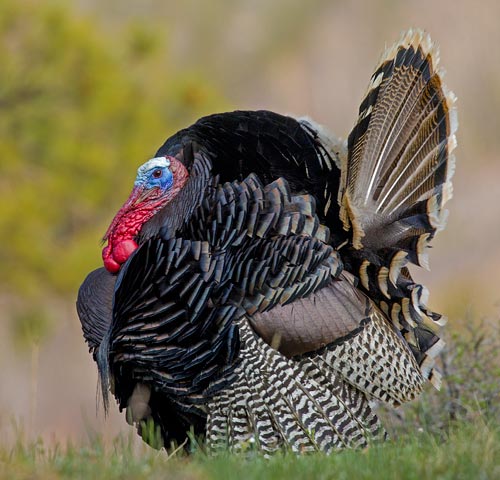
This tom turkey was trying hard to impress a nearby hen, all puffed up, strutting around, gobbling loudly, all to no avail.
Moose Calf Twins
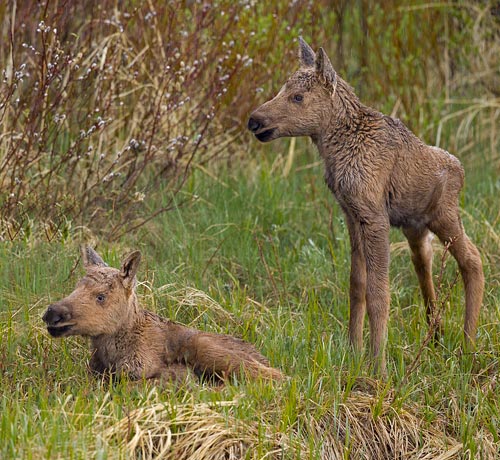
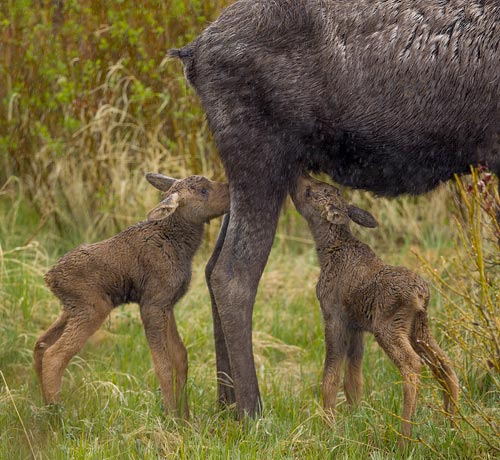
These twin moose calves were just two days old, clumsily romping around, and very hungry.
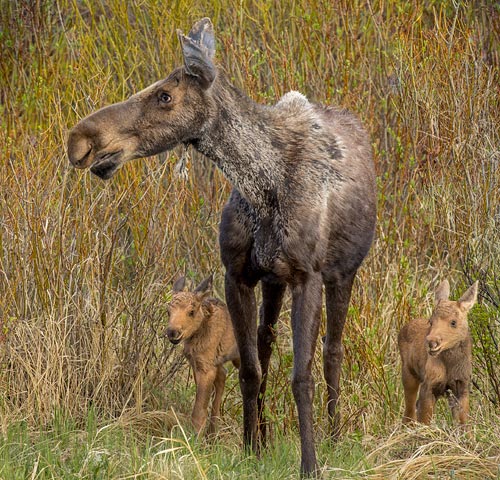
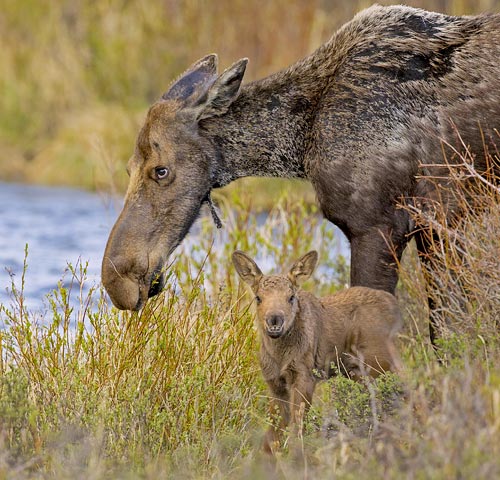
Momma moose keeps a close eye on her two calves, now four days old.
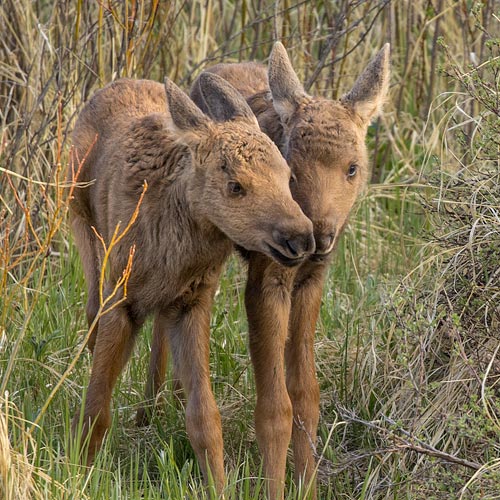
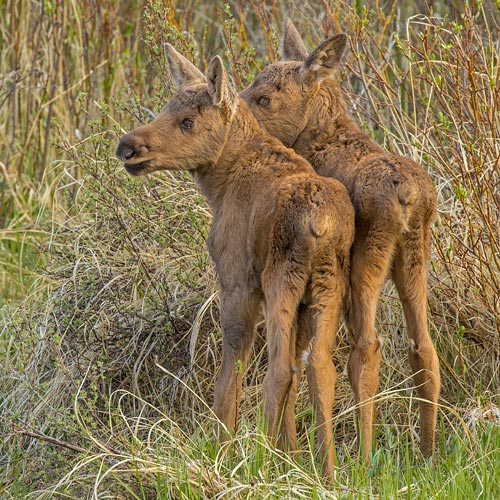
The two calves play together. They spend a lot of time snoozing deep in the willows too.
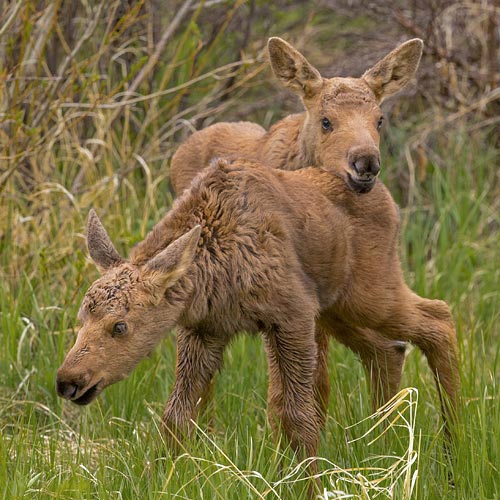
Now nine days old, they continue playing together.
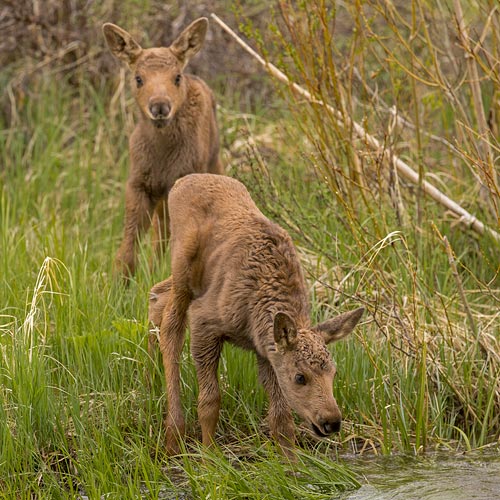
Gotta pause for a drink of fresh mountain water.
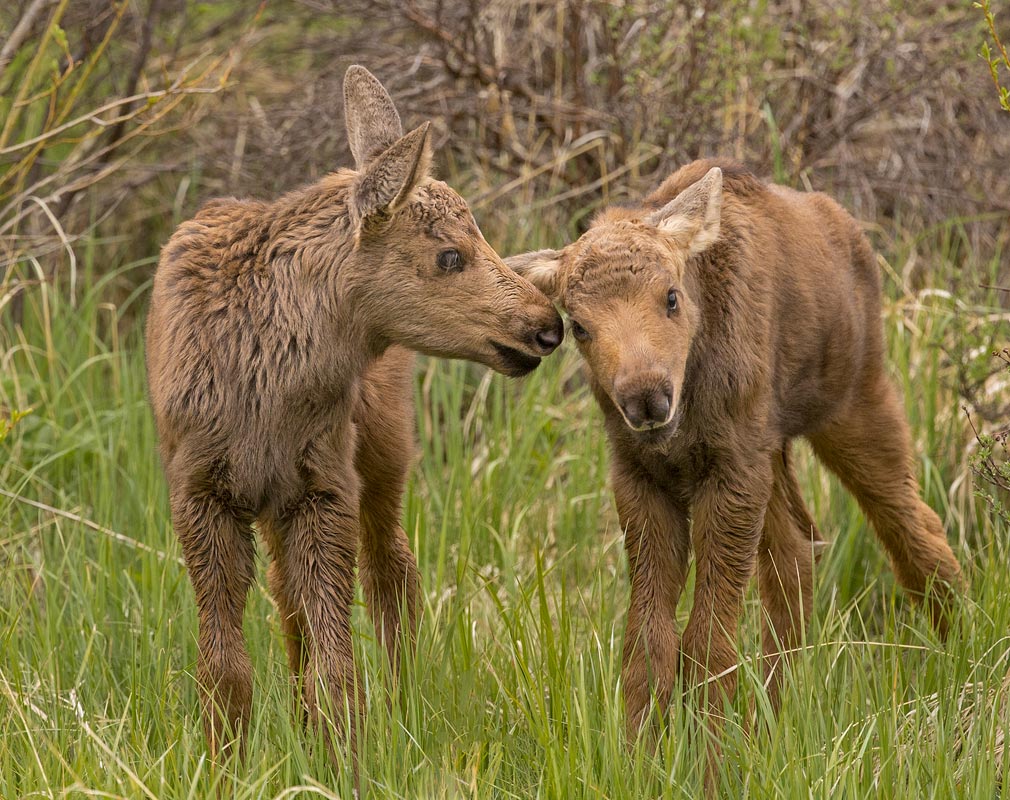
These two calves are so darn cute.
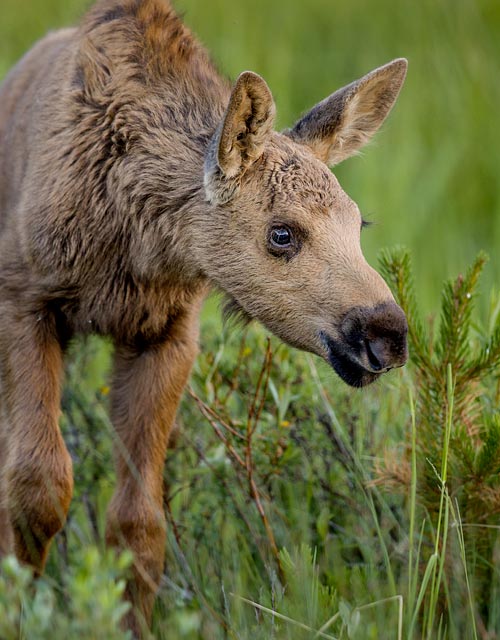
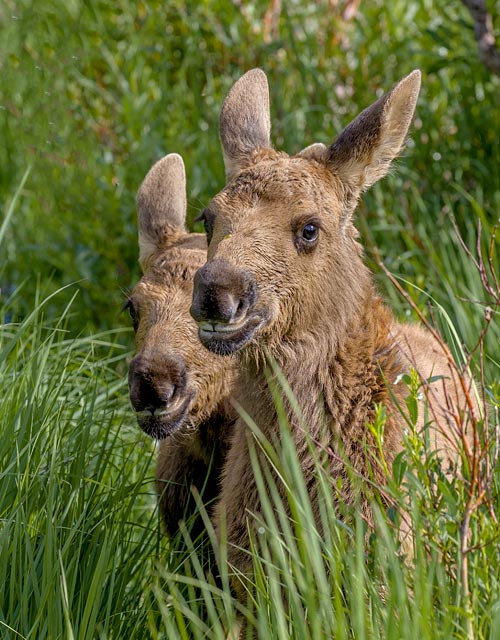
Now six weeks old, they have grown a lot and moved to a different area of the park.
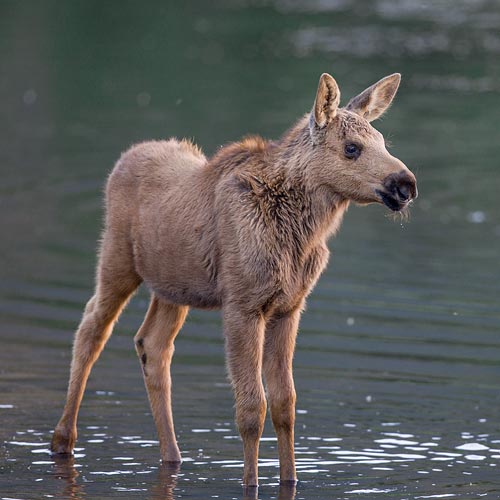
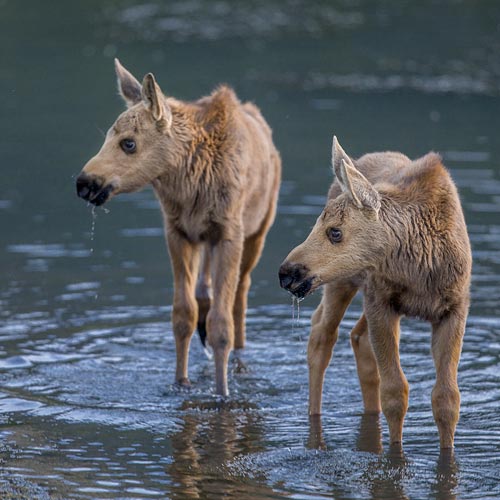
They took a brief dip in a lake for a drink--must be thirsty after eating lots of dry willows.
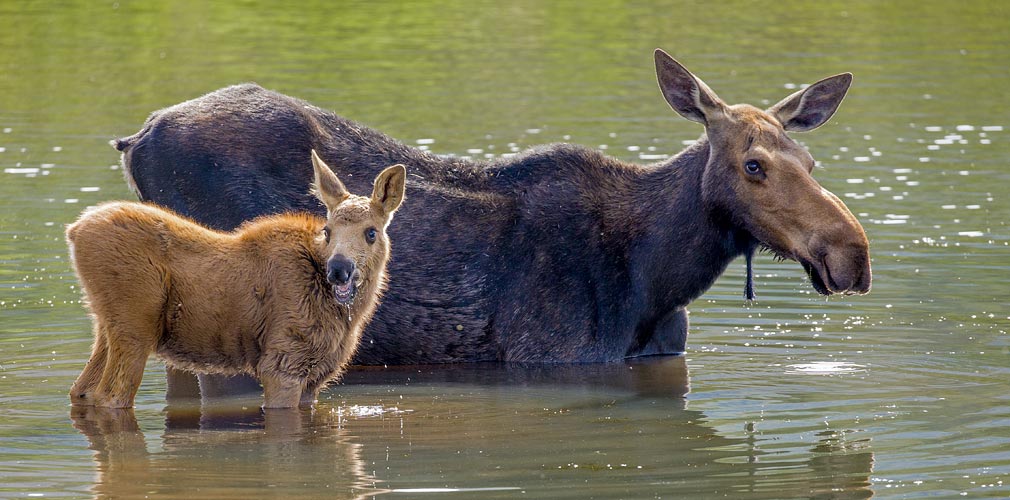
Here's the proud mama moose with one of her two calves.
Backyard Raptors
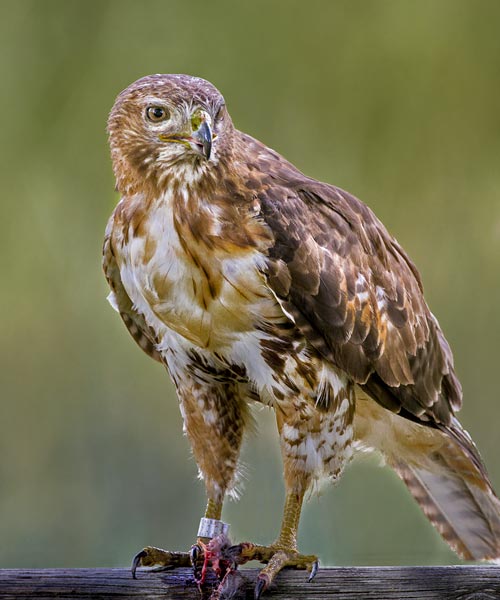
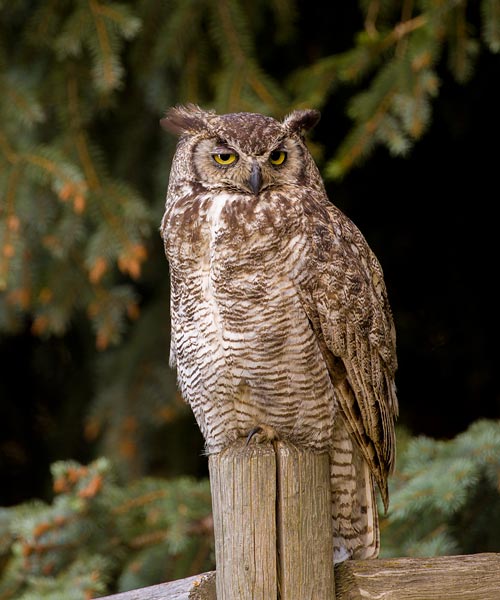
Sometimes I hear bluejays in my backyard making a loud ruckus which often means a raptor is nearby.
Sure enough, this red-tailed hawk was sitting on the fence, eating a small bird.
A few days later, more commotion from the blue jays, so I looked and saw this great horned owl on the fence post.
Elk Calves
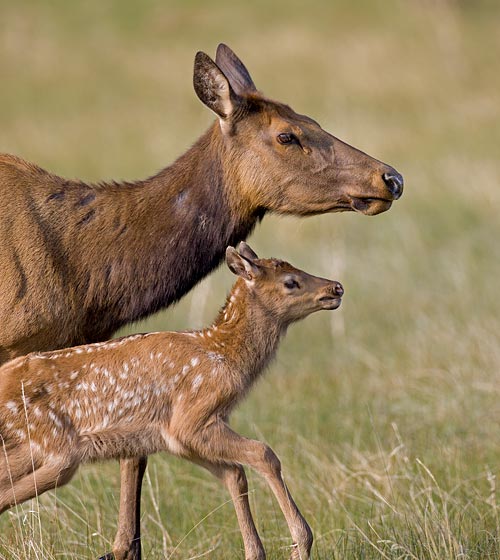
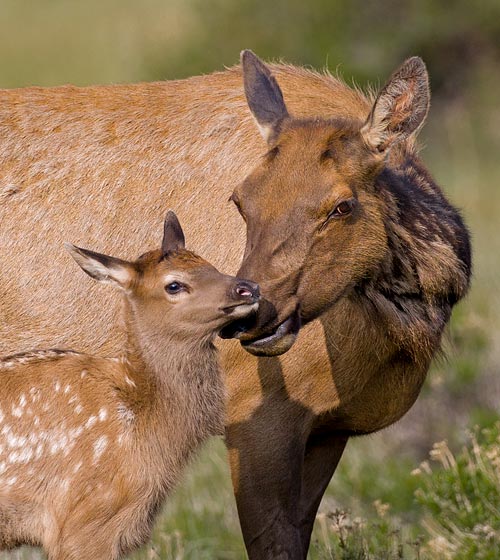
Elk calves are born in mid May. Their moms keep a close eye on them, often nuzzling and licking them.
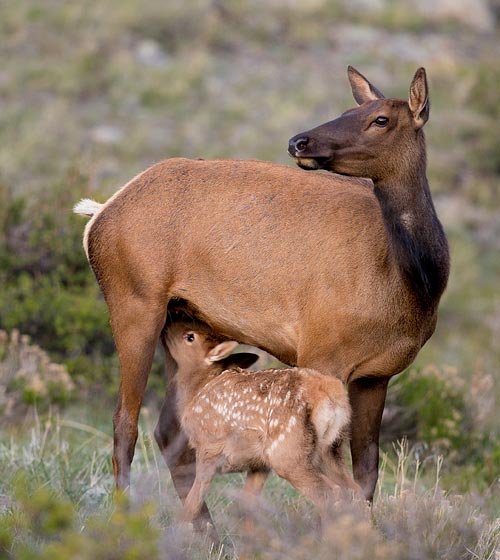
Dinner time
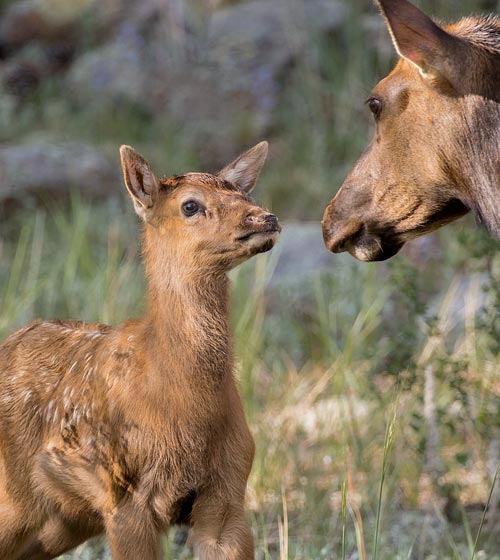
Look like they are having a chat, if only they could talk.
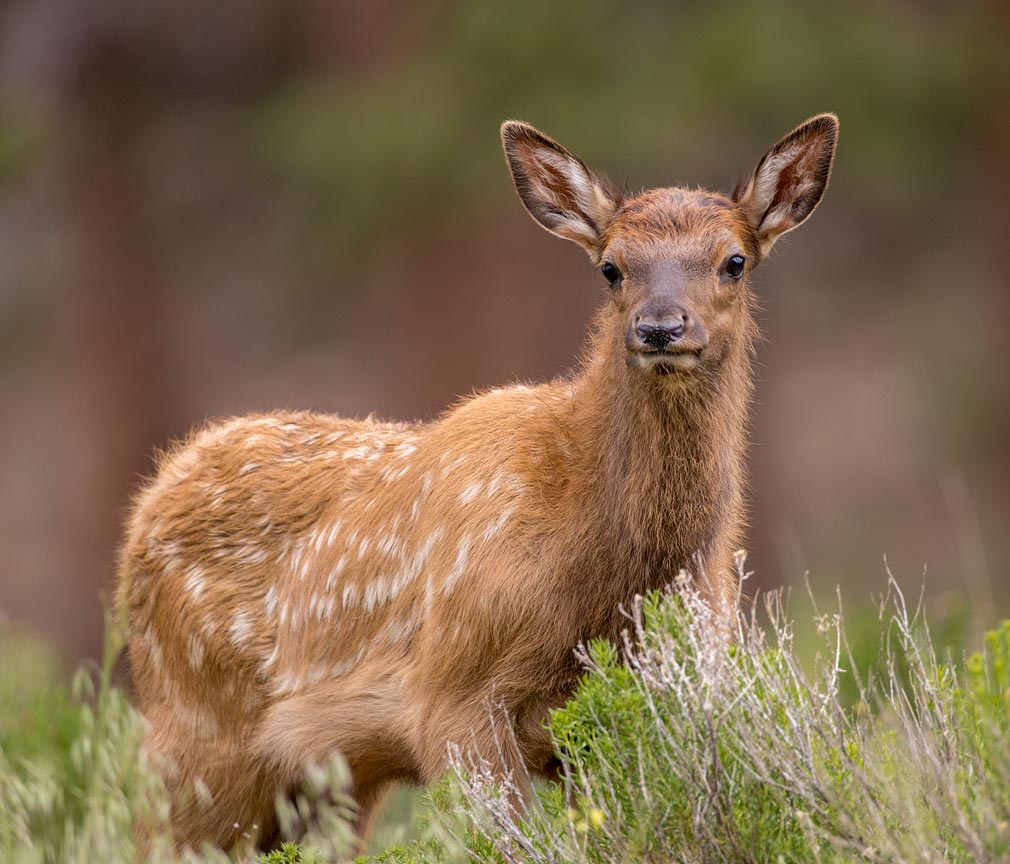
This curious calf is watching me.
Northern Flicker nest
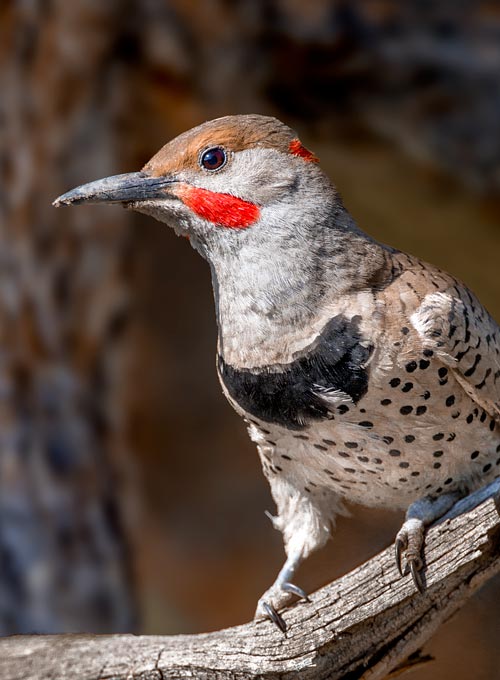
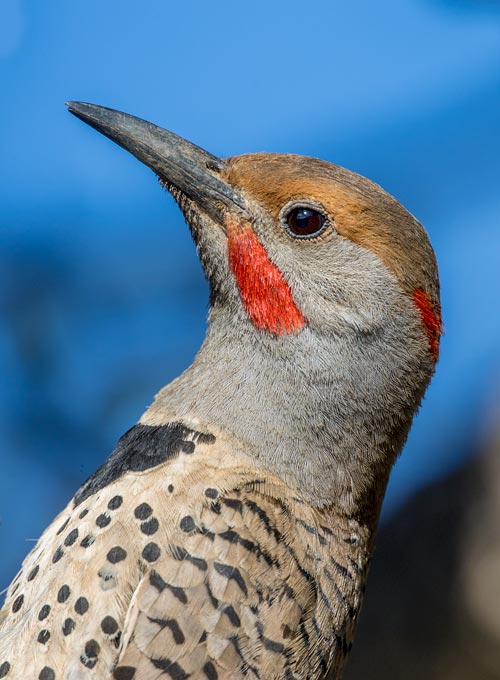
A northern flicker is a fairly large woodpecker.
Males have that red cheek patch.
This one dug a hole in a ponderosa pine for his nest.
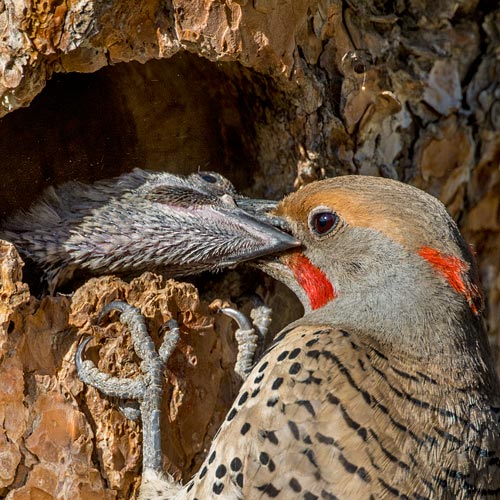
Dad flicker is feeding one of the chicks.
The two chicks politely take turns.
He inserts his beak into the chick's wide-open mouth,
then both heads vibrate rapidly while he regurgitates insects.
Sounds yummy!
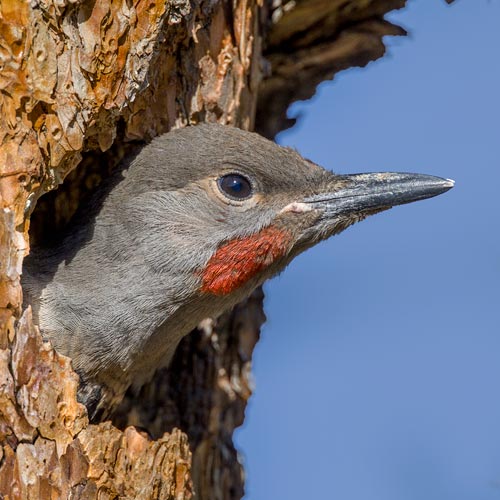
The two chicks are pretty big and spend a lot of time peering out from the nest hole, one at a time.
They fledged two days after this.
Red-Naped Sapsucker nest
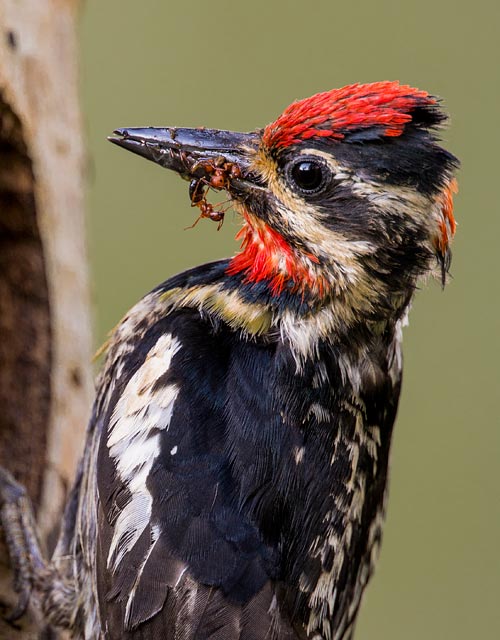
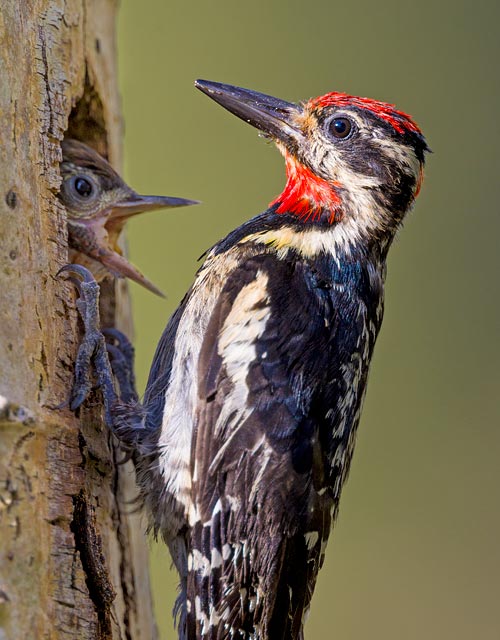
The red-naped sapsucker is a woodpecker too so it drills a cavity for its nest.
After the chicks hatch, both parents make hundreds of trips to collect bugs and ants to feed them.
Sapsuckers carry their bugs and ants in their beaks for all to see.
At first, the parents go into the hole to feed.
When the chicks get larger, they hang out of the hole and scream at their parents.
Mountain Bluebird nest
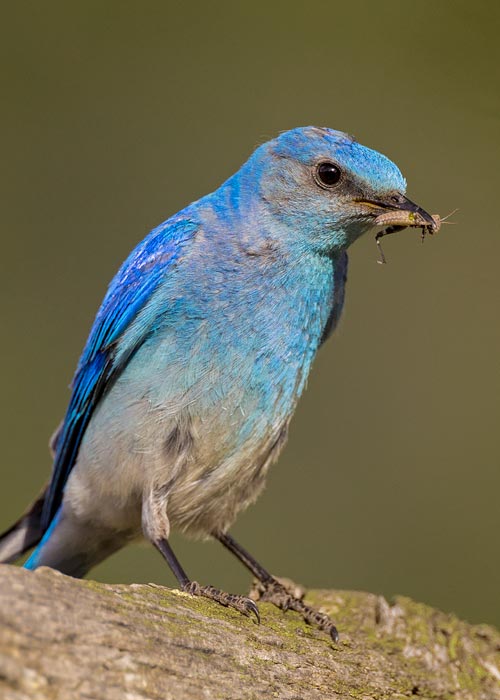
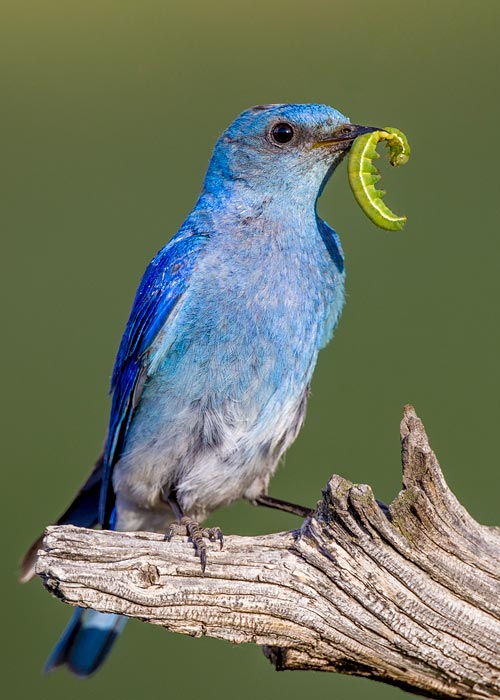
Bluebirds use an existing tree cavity for their nest.
The female mostly incubates the eggs while the male waits nearby, occasionally bringing some food to her.
After the eggs hatch, both parents constantly scour the area for bugs and bring them to their hungry chicks in the nest.
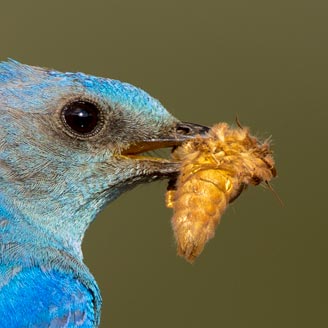
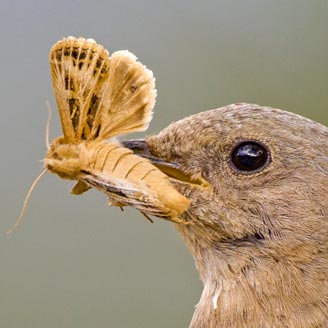
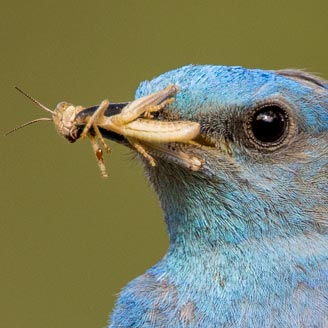
I'm always amazed how fast they can find bugs, and the variety--beetles, grasshoppers, caterpillars.
White-Tailed Ptarmigan
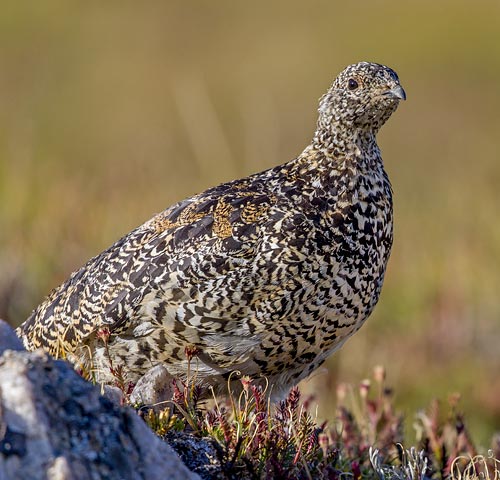
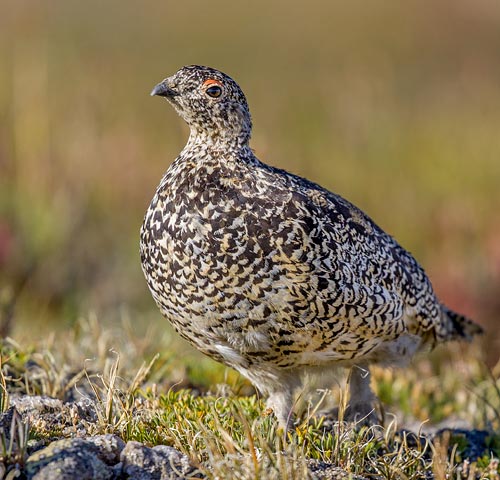
Ptarmigan are birds in the grouse family that live on alpine tundra.
The mottled patterns on their feathers is very good camouflage which makes them extremely difficult to find.
I have made many fruitless trips to the "ptarmigan hot spot" and this time I finally found one.
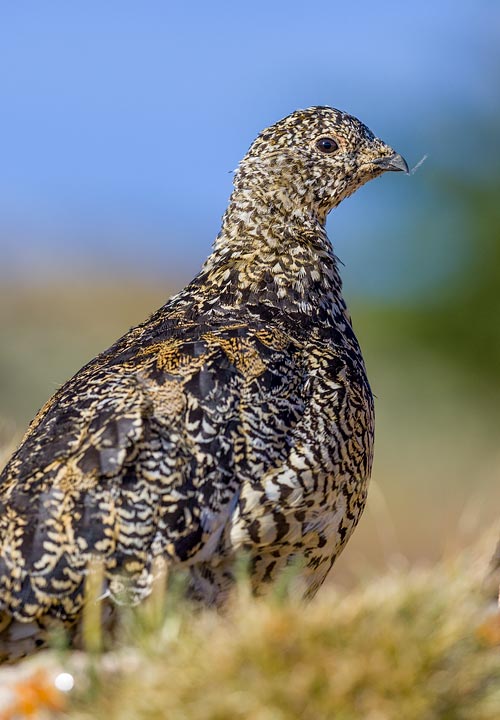
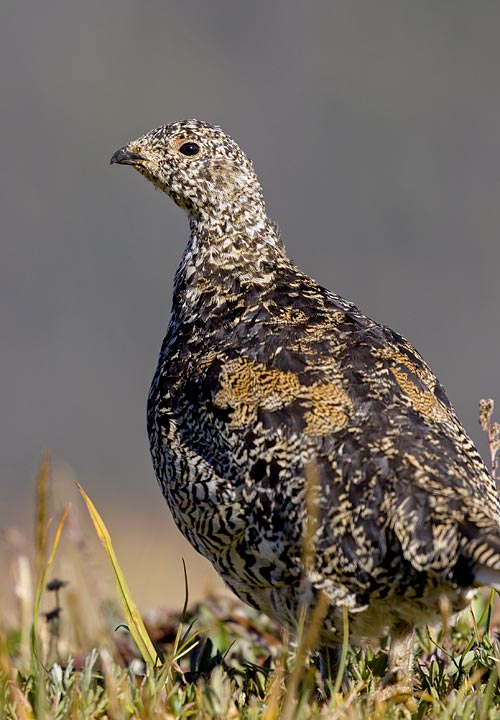
A low-level viewpoint helps get a pleasant clear background of blue sky or distant mountains which is so much better than grassy clutter.
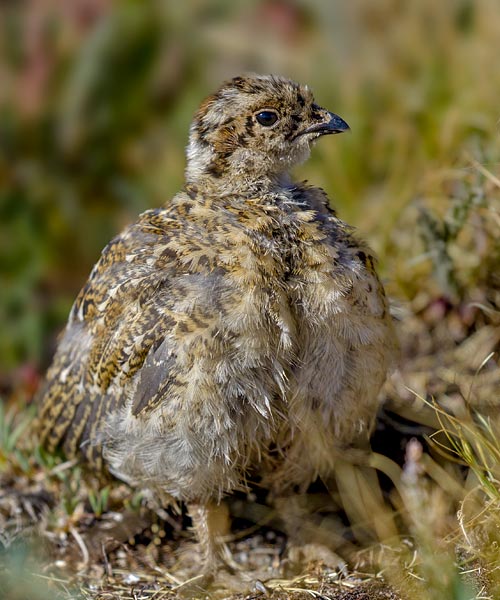
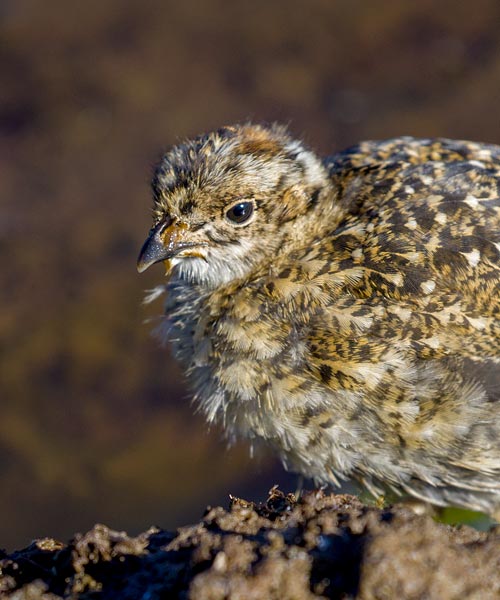
This female ptarmigan had three chicks. They are so darn small that they are mostly hidden in the grass.
I got a few shots through a small clearing.
Elk Rut
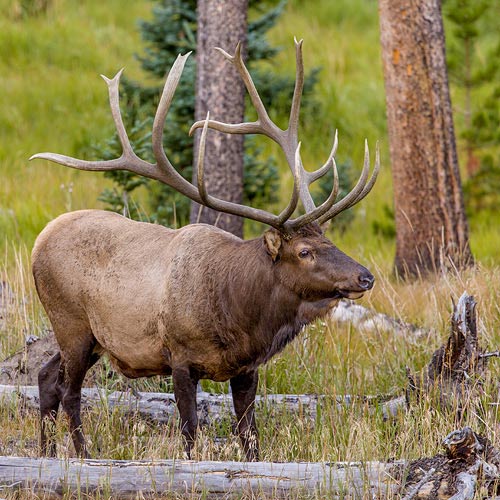
This bull elk was among the largest in the park.
He was nicknamed "Split5" because of forked ends of his fifth antler tines.
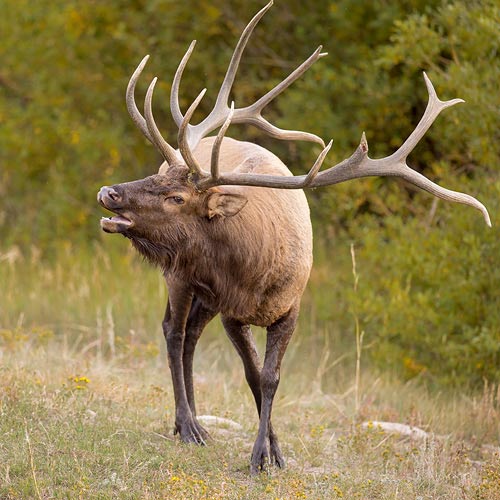
Early in the season he got in a fight and broke off his left fourth tine.
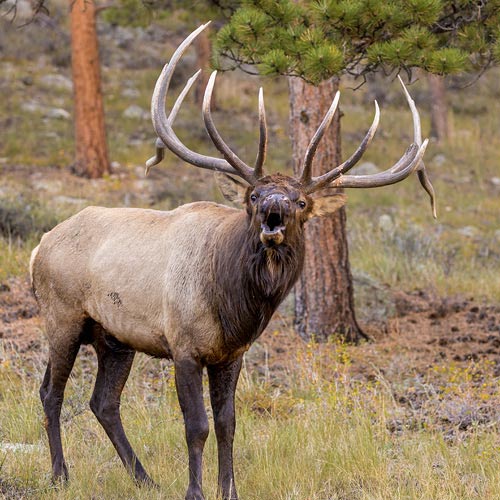
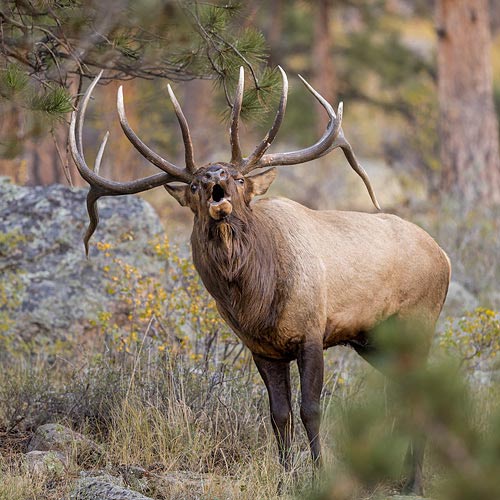
He remained a dominant bull even with that broken antler tine, gathering large harems and bugling frequently.
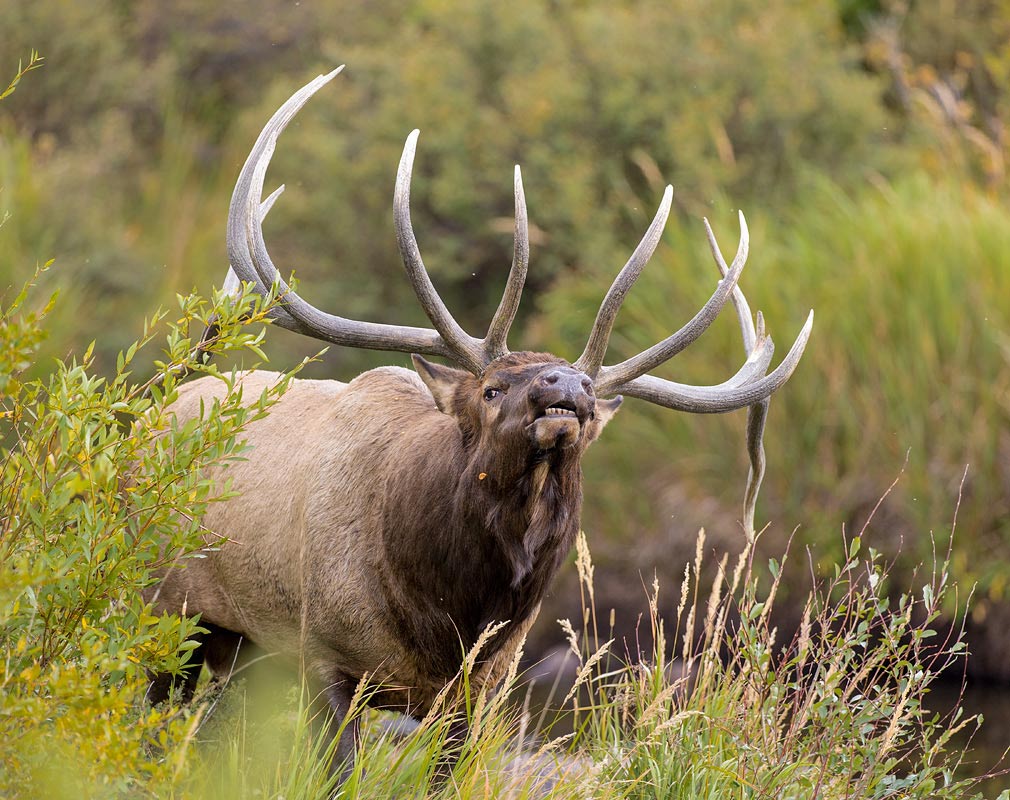
He strutted and bugled to attract cows and repel other bulls.
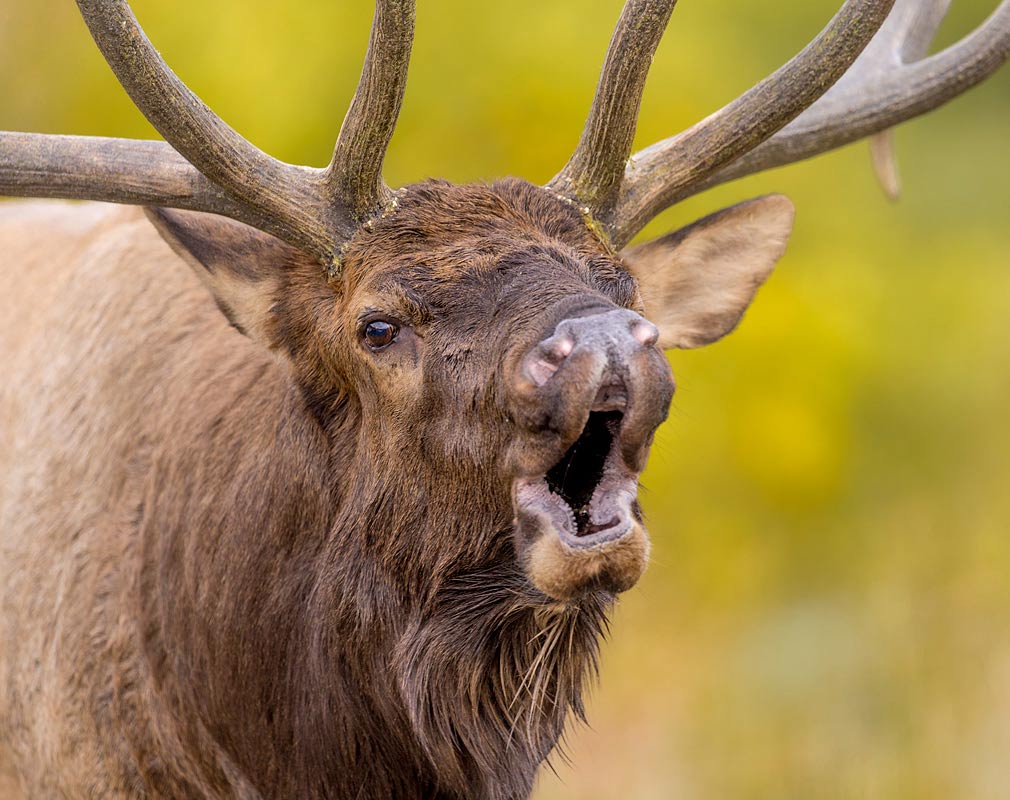
He walked right past my car and let out an tremendous bugle.
It's really loud up close!
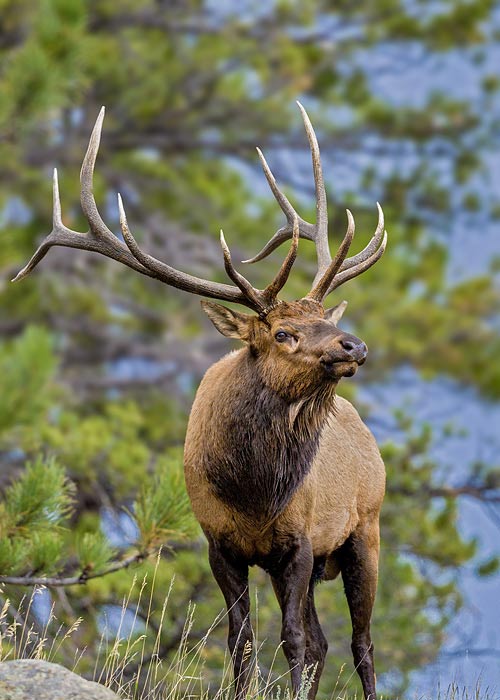
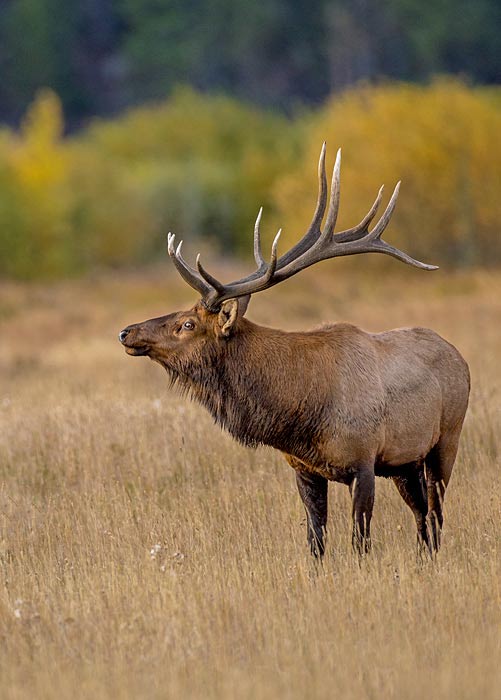
This bull and his harem prudently stayed in a different area.
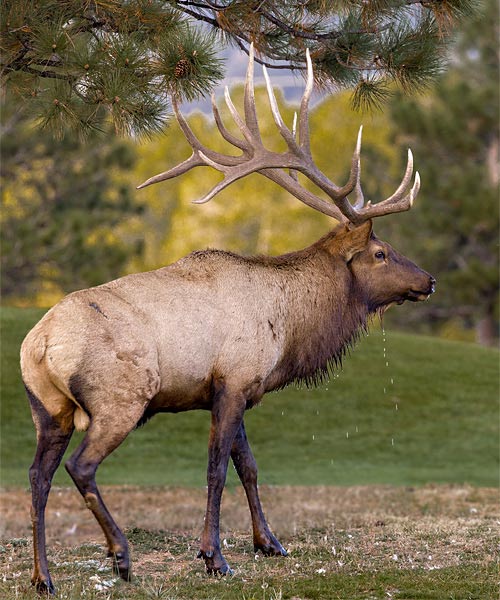
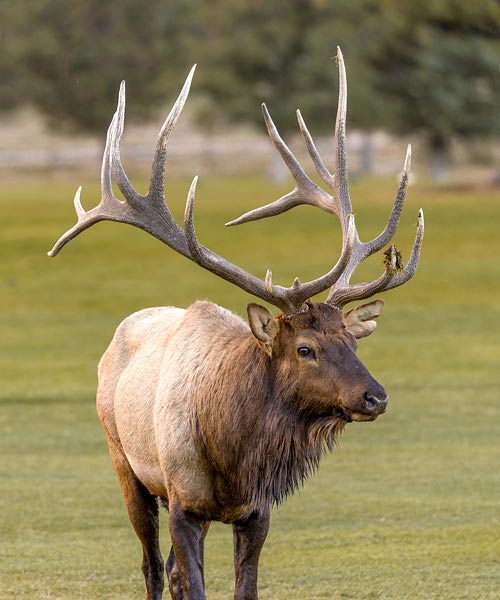
This bull with enormous antlers stayed in town, mostly on the golf course.
I don't know if he let the humans play through.
Wood Duck
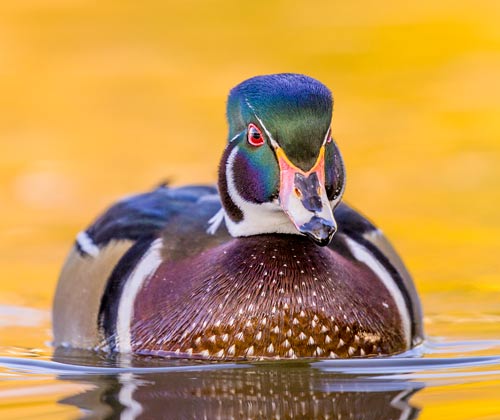
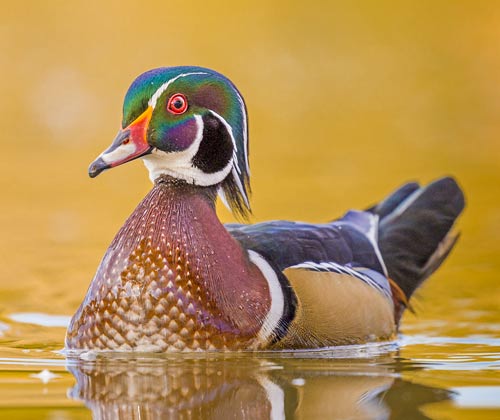
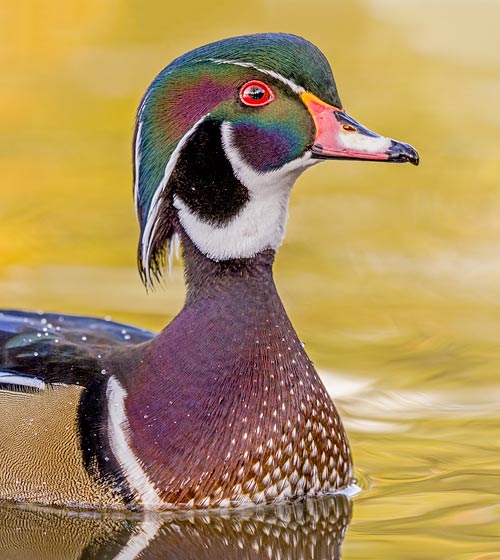
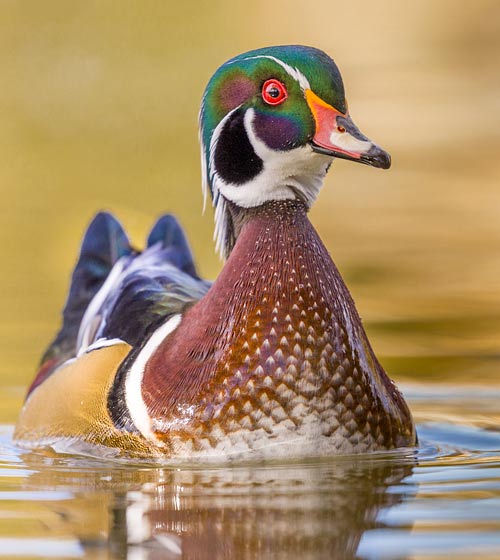
A wood duck drake is dazzling with his irridescent plumage, accentuated by autumn leaves reflecting in the water.
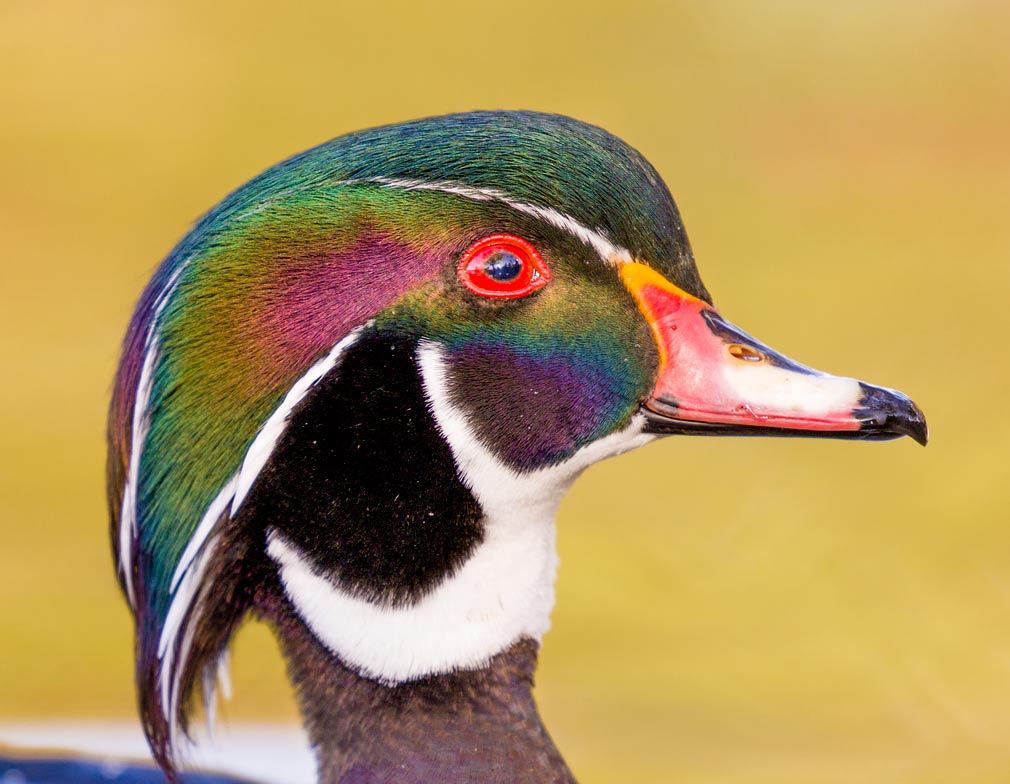
I wonder how he keeps every feather in perfect position.